198
answers get noticeably worse past ~60k tokens even though the window is 200k context-window
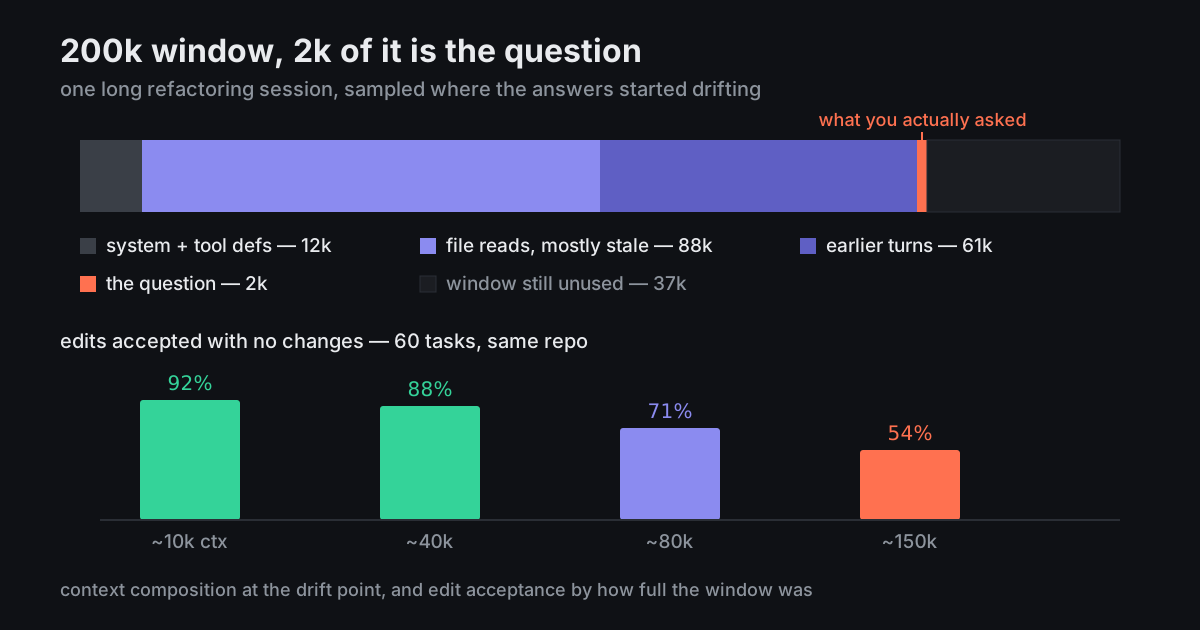
Long refactoring session, one conversation, big monorepo. First hour is excellent. Somewhere around the point where the context indicator says 60-70k it starts:
- reintroducing a bug we fixed 40 minutes earlier
- referring to a function signature from two versions ago
- confidently describing a file it hasn't read in this session
Nothing errors. It just gets subtly worse in a way that costs me more time than a hard failure would, because I keep trusting it for another twenty minutes before I notice.
The window is 200k. Why does it degrade at a third of that, and what's the working pattern — new session per task, summarise and restart, something smarter?
@coworking_cass · 3h ago · 3 replies
Because a long window is a capacity, not a promise about attention. Everything in there competes, and by 60k a large fraction of your context is stale — old file versions, superseded plans, tool output nobody needs any more. The model has no way to know that the version of
parseInvoicefrom turn 6 is dead. Both versions are equally present and equally plausible.What works:
PLAN.mdyou edit as you go survives a restart; a plan described in turn 4 doesn'tRestarting feels like losing progress. It costs ninety seconds and it's usually the fastest thing available to you.
Reply
Report
@wonder_why_wren · 3h ago
'Both versions are equally present and equally plausible' is the clearest description of this I've read. Moved my plan into a file this morning.
Reply
Report
@heirloom_hank · 3h ago
The handoff summary is underrated. I keep a saved prompt for it — done / remaining / files / gotchas — and it makes restarts close to free.
Reply
Report